CNG, or Compressed Natural Gas, is a gaseous fuel used in automobiles as an alternative to conventional fuels such as petrol and diesel. It is primarily made up of methane and is stored in vehicles under high pressure so that a practical amount of fuel can be carried onboard.
CNG has become an important automotive fuel in India, particularly for cars, taxis, buses, three-wheelers and other commercial vehicles. Its popularity is largely associated with its potentially lower running cost, relatively clean combustion characteristics and expanding natural-gas infrastructure.
But what exactly is CNG, how does it work in a vehicle, and what should you know before choosing it?

This complete guide explains what CNG is, what it is made of, how CNG vehicles work, its advantages and disadvantages, safety considerations, and the difference between factory-fitted and retrofitted CNG systems.
What Does CNG Stand For?
CNG stands for Compressed Natural Gas.
Natural gas is compressed to a high pressure to reduce the volume it occupies, allowing it to be stored in specially designed cylinders and used as a vehicle fuel.
Unlike LPG, which is stored as a liquefied gas under pressure, CNG remains in a gaseous state inside the vehicle’s fuel cylinder.
CNG is therefore different from LNG (Liquefied Natural Gas), which is natural gas cooled to a very low temperature so that it becomes liquid.
What is CNG Made Of?
CNG is primarily composed of methane (CH₄), although the exact composition of natural gas can vary depending on its source and processing.
Methane is a hydrocarbon consisting of one carbon atom and four hydrogen atoms.
Methane: The Main Component of CNG
Methane is the main combustible component of natural gas.
When methane burns with oxygen in an engine, it releases energy that can be converted into mechanical power to move the vehicle.
Because methane has a relatively simple molecular structure, CNG can burn with comparatively low levels of certain pollutants under suitable engine and operating conditions.
Other Components Found in Natural Gas
Depending on the source and processing, natural gas may contain smaller quantities of other hydrocarbons and non-hydrocarbon gases.
Before natural gas is supplied for transportation use, it is processed to meet applicable quality requirements.
How is CNG Produced and Stored?
CNG begins as natural gas. The gas is processed and then compressed using specialized equipment.
At a CNG station, the gas is compressed to a high pressure and transferred to a vehicle’s CNG storage cylinder.
From Natural Gas to CNG
The basic process can be simplified as:
Natural Gas → Processing → Compression → CNG Storage → Vehicle
CNG stations use compressors and other equipment to prepare the gas for vehicle refuelling.
The CNG distribution and retail infrastructure in India operates under applicable standards and regulations. The Petroleum and Natural Gas Regulatory Board (PNGRB) publishes technical and safety standards for city gas distribution networks and retail outlets dispensing CNG.
How CNG is Stored in a Vehicle
CNG is stored in a specially designed high-pressure cylinder installed in the vehicle.
The cylinder, valves, pipes and other components form part of the vehicle’s CNG fuel system.
Because the fuel is stored under high pressure, CNG cylinders and associated equipment must be properly designed, installed, inspected and maintained according to applicable requirements.
How Does a CNG Car Work?
A CNG vehicle uses the stored gas as fuel for the engine.
The basic operation can be understood in a few steps:
CNG Cylinder → High-Pressure Fuel Line → Pressure Regulator → Injectors → Engine → Exhaust
CNG Cylinder
The cylinder stores compressed natural gas at high pressure.
The amount of CNG that can be stored depends on the cylinder’s specifications and the vehicle’s system.
Pressure Regulator
The gas stored in the cylinder is at much higher pressure than the pressure required by the engine.
A pressure regulation system reduces and manages the gas pressure before it reaches the engine’s fuel delivery system.
CNG Injectors
In modern sequential CNG systems, electronically controlled injectors meter the appropriate quantity of gas supplied to the engine.
The vehicle’s control system helps manage fuel delivery according to operating conditions.
Engine Combustion
The CNG-air mixture is introduced into the engine and ignited to produce power.
In a bi-fuel vehicle, the driver can generally operate the vehicle using CNG or petrol, depending on the vehicle and its system.
Why is CNG Used as a Vehicle Fuel?
There are several reasons why CNG is used in automobiles.
Lower Running Cost in Many Applications
One of the biggest attractions of CNG for vehicle owners is the potential for a lower cost per kilometre compared with petrol or diesel.
However, the actual saving depends on local fuel prices, vehicle mileage, driving conditions, maintenance and the efficiency of the CNG system.
You can estimate your potential savings using our CNG Savings Calculator.
Cleaner-Burning Characteristics
CNG primarily contains methane and generally produces fewer particulate emissions than conventional diesel combustion.
However, emissions are affected by the vehicle’s engine technology, calibration, maintenance and operating conditions. Therefore, CNG should not simply be described as a completely pollution-free fuel.
Useful for High-Mileage Vehicles
CNG can be particularly attractive for vehicles that travel many kilometres every day.
Taxis, fleet vehicles, buses, three-wheelers and other high-use vehicles can benefit from fuel-cost savings when suitable CNG infrastructure is available.
Availability of CNG Infrastructure
CNG availability has expanded through India’s city gas distribution network, although availability still varies between cities and regions.
Vehicle owners should always consider the availability of convenient CNG stations before choosing a CNG vehicle or conversion.
Advantages of CNG
CNG offers several potential advantages for automobile users.
Lower Fuel Cost per Kilometre
Where CNG is priced favourably and the vehicle delivers good CNG mileage, the running cost can be lower than petrol.
Reduced Particulate Emissions
CNG combustion generally produces very low particulate emissions compared with conventional diesel combustion.
The actual emissions performance depends on the engine and vehicle technology.
High-Octane Fuel
Natural gas has a high octane rating, which makes it suitable for use in appropriately designed spark-ignition engines.
Good Option for High-Usage Vehicles
Vehicles travelling long distances every day can potentially recover the additional cost of a CNG system through fuel savings.
Reduced Dependence on Petrol for Bi-Fuel Vehicles
Many CNG cars in India are designed to operate using both CNG and petrol.
This provides flexibility when CNG is unavailable or when a longer driving range is required.
Disadvantages of CNG
CNG also has limitations that should be considered before choosing it.
CNG Stations May Not Be Available Everywhere
CNG infrastructure is not equally developed in every location.
If you regularly travel through areas with limited CNG availability, refuelling convenience can become an important consideration.
Additional Space May Be Required for the Cylinder
In some vehicles, particularly retrofitted vehicles, the CNG cylinder can occupy part of the luggage or usable storage area.
The effect depends on the vehicle and cylinder installation.
Higher Initial Cost
A factory-fitted CNG vehicle or an approved retrofit system may cost more initially than a comparable petrol-only vehicle.
However, the difference can potentially be recovered over time through fuel savings.
CNG System Requires Proper Maintenance
CNG is not a maintenance-free fuel system.
The cylinder, valves, pressure regulator, injectors, pipes and other components need appropriate inspection and maintenance according to the vehicle manufacturer’s and applicable system requirements.
Refuelling Can Require Planning
Drivers who frequently travel outside CNG-covered areas may need to plan their route around available CNG stations.
Is CNG Safe for Cars?
CNG can be used safely in vehicles when the vehicle, fuel system, cylinder and associated components are properly designed, installed, maintained and operated.
However, CNG is a flammable fuel stored at high pressure, so safety should never be taken for granted.
India has technical and safety standards covering CNG infrastructure, including retail outlets dispensing CNG.
Why CNG Requires High-Pressure Storage
CNG is stored as compressed gas rather than as a liquid.
Compression allows a useful quantity of gas to be carried in a vehicle, but it also means that the storage system operates at high pressure.
For this reason, cylinders and related components must be suitable for the application and handled according to applicable requirements.
CNG Safety Precautions
CNG vehicle owners should:
- Follow the vehicle manufacturer’s maintenance recommendations.
- Have CNG-system work performed by qualified or authorized professionals.
- Never modify the CNG system yourself.
- Do not ignore unusual gas smells, leaks or damaged components.
- Keep ignition sources away from a suspected gas leak.
- Follow applicable cylinder inspection/testing requirements.
- Use appropriate replacement components for the vehicle’s CNG system.
What to Do if You Suspect a CNG Leak
If you suspect a CNG leak, move away from possible ignition sources and seek assistance from a qualified professional or the appropriate emergency service.
Do not attempt an unfamiliar repair yourself.
If the situation is immediately dangerous, prioritize getting people to a safe location.
CNG vs Petrol vs Diesel
CNG, petrol and diesel are all used as transportation fuels, but they differ in physical properties, storage and vehicle applications.
| Feature | CNG | Petrol | Diesel |
|---|---|---|---|
| Fuel form in vehicle | Compressed gas | Liquid | Liquid |
| Main fuel component | Mainly methane | Hydrocarbon mixture | Hydrocarbon mixture |
| Storage | High-pressure cylinder | Fuel tank | Fuel tank |
| Common automotive applications | Cars, taxis, buses, three-wheelers and commercial vehicles | Cars and many other vehicles | Cars, buses, trucks and other commercial vehicles |
| Refuelling infrastructure | CNG stations | Petrol stations | Diesel stations |
| Running cost | Often competitive, depending on local prices and mileage | Depends on local fuel price and mileage | Depends on local fuel price and mileage |
| Emissions | Generally low particulate emissions; overall emissions depend on vehicle technology | Depends on engine and emission technology | Depends strongly on engine and emission technology |
For a more detailed comparison, see our article on CNG vs LPG and other vehicle fuels.
Factory-Fitted vs Aftermarket CNG
There are two common ways a vehicle may be equipped with CNG.
Factory-Fitted CNG Vehicles
A factory-fitted CNG vehicle is designed and produced by the vehicle manufacturer with a CNG system integrated into the vehicle.
The manufacturer designs and tests the vehicle as a CNG model and provides the corresponding operating and maintenance information.
Retrofitted CNG Kits
A petrol vehicle may also be converted to CNG using a suitable retrofit system where permitted and appropriate.
The quality of the kit, compatibility with the vehicle, installation process and compliance requirements are extremely important.
Not every CNG kit is suitable for every vehicle.
Why Proper Installation Matters
A CNG conversion should not be treated as a simple accessory installation.
The fuel system involves high-pressure gas storage and specialized components. Incorrect installation, unsuitable components or poor maintenance can create safety, reliability and performance problems.
Before converting a vehicle, owners should check the applicable requirements and use an appropriate, qualified installation facility.
Learn more about CNG Kits and CNG Components on CNGIndia.
Is CNG Suitable for Every Vehicle?
No single fuel is ideal for every vehicle or every driving situation.
Whether CNG is suitable depends on factors such as:
- Vehicle type
- Engine design
- Manufacturer specifications
- Availability of an appropriate CNG system
- Local CNG infrastructure
- Daily driving distance
- Expected fuel savings
- Installation and maintenance requirements
If you are considering converting a petrol vehicle to CNG, research the vehicle’s compatibility and applicable requirements before making a decision.
CNG for Commercial Vehicles
CNG is widely used in applications where vehicles travel significant distances every day.
Examples include:
- Taxis
- Auto-rickshaws
- City buses
- Delivery vehicles
- Fleet vehicles
- Other suitable commercial vehicles
For high-mileage users, fuel cost per kilometre can be an important factor when comparing CNG with petrol or diesel.
However, the economics should always be calculated using actual local fuel prices and the vehicle’s real-world mileage rather than relying only on advertised figures.
CNG in India
CNG has become an important part of India’s city gas distribution and transportation-fuel infrastructure.
The country’s CNG network has developed through authorized city gas distribution entities, with regulatory oversight and technical standards established for relevant infrastructure. PNGRB publishes regulations, guidelines and data relating to city gas distribution and CNG infrastructure.
Because infrastructure changes over time, information such as the number of CNG stations should always be checked against the latest available official or provider data rather than relying on an old fixed number.
For vehicle owners, the practical question is often simpler:
Is CNG easily available on the routes I normally travel?
Before buying a CNG vehicle or converting a petrol vehicle, check the availability of CNG stations in your city and along your regular routes.
You can also explore our CNG Pumps Near Me section to find useful CNG refuelling information.
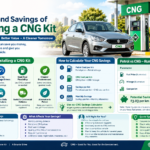
How Much Can You Save With CNG?
Your actual savings depend on several factors:
- Petrol price
- CNG price
- CNG mileage
- Petrol mileage
- Daily kilometres
- Vehicle maintenance
- Cost of CNG conversion, if applicable
For example, suppose a vehicle travels 1,000 km per month.
If the vehicle’s fuel cost is ₹4 per kilometre lower when using CNG, the theoretical monthly fuel saving would be:
1,000 × ₹4 = ₹4,000 per month
But this is only an example. Your actual saving will depend on current prices and your vehicle’s real-world fuel economy.
Use the CNG Savings Calculator on CNGIndia to calculate your own estimated savings.
CNG Maintenance: What Vehicle Owners Should Know
A CNG vehicle still needs regular maintenance.
Depending on the vehicle and system, owners should pay attention to:
- Engine maintenance
- CNG injectors
- Pressure regulator
- Fuel lines and connections
- CNG cylinder
- Valves and associated components
- Spark plugs and ignition system
- Filters where applicable
- Manufacturer-recommended servicing
Never assume that a CNG vehicle does not require servicing simply because CNG burns relatively cleanly.
Proper maintenance helps maintain performance, reliability and safety.
For more practical advice, see our guide on Taking Care of Your CNG Car at Home.
CNG Cylinder: Why It Matters
The CNG cylinder is one of the most important components of a CNG vehicle because it stores compressed natural gas at high pressure.
Vehicle owners should never drill, modify, repair or otherwise alter a CNG cylinder without appropriate professional guidance.
The cylinder and its associated components should be inspected and tested according to the applicable requirements.
If you are looking for more information about CNG cylinders, see our CNG Cylinders section.
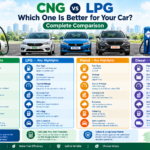
CNG vs LPG: Are They the Same?
No.
Although both CNG and LPG are gaseous fuels used in some vehicles, they are different fuels.
CNG is primarily methane and is stored as compressed natural gas.
LPG (Liquefied Petroleum Gas) consists mainly of propane and/or butane and is stored as a liquid under pressure.
They therefore require different storage systems, fuel-system components and handling procedures.
Never assume that a component designed for LPG can automatically be used with CNG.
Frequently Asked Questions About CNG
What is CNG?
CNG stands for Compressed Natural Gas. It is natural gas, primarily methane, that has been compressed and stored under high pressure for use as a fuel.
What is the full form of CNG?
The full form of CNG is Compressed Natural Gas.
What is CNG made of?
CNG is primarily methane (CH₄), although natural gas can contain smaller quantities of other components depending on its source and processing.
Is CNG safe for cars?
CNG can be safely used when the vehicle and CNG system are properly designed, installed, maintained and operated. Because CNG is stored at high pressure and is flammable, appropriate safety practices are essential.
Is CNG cheaper than petrol?
CNG can provide a lower fuel cost per kilometre than petrol in many locations, but the actual saving depends on local fuel prices, vehicle mileage and driving conditions.
Can a petrol car be converted to CNG?
Some petrol vehicles may be suitable for CNG conversion using an appropriate retrofit system. Compatibility, installation quality and applicable requirements must be checked before conversion.
How is CNG stored in a car?
CNG is stored as compressed gas in a specially designed high-pressure cylinder.
Does CNG require maintenance?
Yes. A CNG vehicle requires normal vehicle maintenance as well as appropriate inspection and maintenance of its CNG-specific components.
What is the difference between CNG and LPG?
CNG is primarily methane stored as compressed gas, while LPG is mainly propane and/or butane stored in liquid form under pressure. They are different fuels and use different fuel systems.
Is CNG environmentally friendly?
CNG is not a zero-emission fuel. However, compared with some conventional fuels and depending on vehicle technology and operating conditions, CNG can offer lower levels of certain pollutants, particularly particulate emissions. Its overall environmental impact also depends on methane leakage and the full fuel supply chain.
Final Thoughts: Is CNG a Good Fuel for Automobiles?
CNG can be a practical fuel choice for many automobile users, particularly drivers who travel significant distances and have convenient access to CNG stations.
Its major attractions include the potential for lower running costs, relatively low particulate emissions and established use in many passenger and commercial vehicles.
At the same time, CNG is not automatically the best option for every vehicle or driver. Availability of refuelling stations, vehicle compatibility, cylinder space, initial cost, maintenance and local fuel prices should all be considered.
If you are thinking about buying a CNG vehicle or converting an existing petrol vehicle, make your decision based on your vehicle, your driving pattern, local CNG availability and actual running-cost calculations.
Explore more CNG resources on CNGIndia:
- CNG Savings Calculator
- CNG Kits
- CNG Cylinders
- CNG Components
- CNG Pumps
- CNG Fitment Centers
- CNG Tank Hydro Testing Centers
- CNG Service Centers
- CNG Safety & Maintenance Guides
CNG is more than simply an alternative fuel. Understanding how the fuel, vehicle system and supporting infrastructure work can help you make a better and safer decision as a vehicle owner.





5 thoughts on “What is CNG? A Complete Guide to CNG for Automobiles”